Singer:
Album:
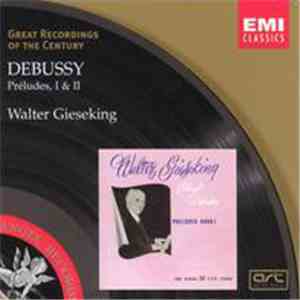
Préludes, I & II
Genre:
FLAC album size:
1117 mb
MP3 album size:
1933 mb
WMA album size:
1329 mb
Other music formats:
MOD AHX DMF XM RA MMF WAV
Rating:
4.7 ✱
Style:
Modern
Country:
Date of release:
Debussy / Walter Gieseking - Préludes, I & II FLAC

Tracklist
| Préludes, Livre I | ||
| 1 | I Danseuses De Delphes (Lent Et Grave) | 3:13 |
| 2 | II Voiles (Moderé) | 2:43 |
| 3 | III Le Vent Dans La Plaine (Animé) | 1:58 |
| 4 | IV Les Sons Et Les Parfums Tournent Dans L'air Du Soir (Moderé) | 3:31 |
| 5 | V Les Collines D'Anacapri (Très Moderé) | 2:48 |
| 6 | VI Des Pas Sur La Neige (Triste Et Lent) | 3:29 |
| 7 | VII Ce Qu'a Vu Le Vent D'Ouest (Animé Et Tumultueux) | 2:46 |
| 8 | VIII La Fille Aux Cheveux De Lin (Très Calme Et Doucement Expressif) | 2:26 |
| 9 | IX La Sérénade Interrompue (Modérément Animé) | 2:15 |
| 10 | X La Cathédrale Engloutie (Profondément Calme) | 6:34 |
| 11 | XI La Danse De Puck (Capricieux Et Léger) | 2:27 |
| 12 | XII Minstrels (Modéré) | 2:06 |
| Préludes, Livre II | ||
| 13 | I Brouillards (Modéré) | 2:50 |
| 14 | II Feuilles Mortes (Lent Et Mélancolique) | 2:58 |
| 15 | III La Puerta Del Vino (Mouvement De Habanera) | 2:50 |
| 16 | IV Les Fées Sont D'exquises Danseuses (Rapide Et Léger) | 2:47 |
| 17 | V Bruyères (Calme) | 2:34 |
| 18 | VI General Lavine - Eccentric (Dans Le Style Et Le Mouvement D'un Cakewalk) | 2:28 |
| 19 | VII La Terrasse Des Audiences Du Clair De Lune (Lent) | 3:50 |
| 20 | VIII Ondine (Scherzando) | 2:50 |
| 21 | IX Hommage À S. Pickwick, Esq., P.P.M.P.C. (Grave) | 2:10 |
| 22 | X Canope (Très Calme Et Doucement Triste) | 2:47 |
| 23 | XI Les Tierces Alternées (Modérément Animé) | 2:26 |
| 24 | XII Feux D'artifice (Modérément Animé) | 3:23 |
Companies, etc.
- Copyright (c) – EMI Records Ltd.
- Phonographic Copyright (p) – EMI Records Ltd.
- Recorded At – Abbey Road Studios
- Pressed By – EMI Uden
Credits
- Composed By – Claude Debussy
- Design [Front Cover] – Enterprise IG
- Engineer [Balance] – Christopher Parker (tracks: 1 to 12), Francis Dillnutt (tracks: 13 to 24)
- Liner Notes – Bryce Morrison
- Liner Notes [French Translation] – Michel Roubinet
- Liner Notes [German Translation] – Helga Ratcliff
- Liner Notes [Spanish Translation] – Carlos Fernández Aransay
- Piano – Walter Gieseking
- Producer – Geraint Jones (tracks: 1 to 12), Walter Legge (tracks: 13 to 24)
- Remastered By – Andrew Walter
Notes
Recorded: 15, 16.VIII.1953 (1-12) & 9, 10.XII.1954 (13-24), No.3 Studio, Abbey Road, LondonCompilation originally released in 1987
℗ 1953 (1-12), 1955 (13-24)
This compilation ℗ 1987 by EMI Records Ltd.
© 2000 EMI Records Ltd.
20-page booklet in English, German, French and Spanish.
Barcode and Other Identifiers
- Barcode (Text): 7 24356 72332 0
- Barcode: 724356723320
- SPARS Code: ADD
- Label Code: LC 6646
- Matrix / Runout: EMI UDEN 5672332 @2 2-3-1-NL
- Mastering SID Code: IFPI L046
- Mould SID Code: IFPI 1546
Other versions
| Category | Artist | Title (Format) | Label | Category | Country | Year |
|---|---|---|---|---|---|---|
| CDH 7610042 | Debussy*, Gieseking* | Debussy*, Gieseking* - Préludes (CD, Comp, Mono, RM) | EMI Classics | CDH 7610042 | US | 1990 |
| CDH 7 61004 2 | Debussy* / Walter Gieseking | Debussy* / Walter Gieseking - Préludes, Livres I & II (CD, Comp, Mono, RM) | EMI | CDH 7 61004 2 | Europe | 1987 |
| CDH 7 61004 2, 0777 7 61004 2 5 | Debussy* - Walter Gieseking | Debussy* - Walter Gieseking - Préludes, Livres I & II (CD, Comp, Mono, RE, RM) | EMI, EMI | CDH 7 61004 2, 0777 7 61004 2 5 | Europe | 1987 |
| 2-53 2905543 | Debussy*, Gieseking* | Debussy*, Gieseking* - 24 Préludes (2xLP, Mono) | Emi - La Voce Del Padrone | 2-53 2905543 | Italy | 1985 |
| PAKM 061 | Gieseking*, Debussy* | Gieseking*, Debussy* - Preludes (CD, Amb) | Pristine Audio | PAKM 061 | France | 2013 |
Review Debussy / Walter Gieseking - Préludes, I & II
Related albums at Debussy / Walter Gieseking - Préludes, I & II