Electronic stylePop musicJazzBluesRock musicLatinFunk & SoulClassical musicBrass & MilitaryHip-hop & RAPReggaeFor childrenWorld & CountryScreen & StageNot musicOther
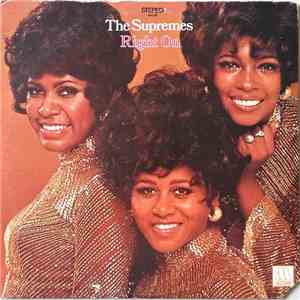
» » The Supremes - Right On
The Supremes - Right On FLAC

Singer:

The Supremes

Album:

Right On

Genre:

Funk & Soul

FLAC album size:

1199 mb

MP3 album size:

1976 mb

WMA album size:

1816 mb

Other music formats:

DTS AU ADX AHX VOC RA FLAC

Rating:

4.1 ✱

Style:

Soul

Country:

Taiwan

Date of release:

1970

The Supremes - Right On FLAC


The Supremes - Right On FLAC

Tracklist

A1 Up The Ladder To The Roof 2:58
A2 Then We Can Try Again 2:35
A3 Everybody's Got The Right To Love 2:36
A4 Wait A Minute Before You Leave Me 2:56
A5 You Move Me 2:45
A6 But I Love You More 3:15
B1 I Got Hurt (Trying To Be The Only Girl In Your Life) 2:30
B2 Baby Baby 2:42
B3 Take A Closer Look At Me 2:34
B4 Then I Met You 2:56
B5 Bill, When Are You Coming Back 3:20
B6 The Loving Country 3:45

Credits

  • Art Direction – Curtis McNair
  • Design [Album] – Okamoto*, Jim Ladwig
  • Design [Packaging] – Album Graphics Inc.*
  • Photography By – Frank Dandridge

Notes

Album designed at London Studio
Trademark © 1970 Motown Record Corporation
Printed in U.S.A.

Cover printed in special "poster" gatefold sleeve: punctured gatefold is on top of the sleeve and can be torn away leaving a standard LP jacket, and the rest is a 12"x24" folded (in the middle) cardboard poster featuring an alternate pose of the album cover. 2" of the top part of the poster has the track listing printed on it and has a punctured line that separates it from the poster.

Label variation with Lp artist/title in one line on top "Right On" - The Supremes.

Barcode and Other Identifiers

  • Matrix / Runout (Side 1 Label): HS-1700-3
  • Matrix / Runout (Side 2 Label): HS-1700-4
  • Matrix / Runout (Side 1 Label): Z4RS-2145
  • Matrix / Runout (Side 2 Label): Z4RS-2146
  • Other (Rights Society): BMI

Other versions

Category Artist Title (Format) Label Category Country Year
TD-1048 The Supremes Right On ‎(LP, Album) Giant TD-1048 Taiwan 1970
STML 11157 The Supremes Right On ‎(LP, Album) Tamla Motown STML 11157 UK 1970
MS705 The Supremes Right On ‎(LP, Album) Tamla Motown MS705 Canada 1970
1 C 062-91 456 The Supremes Right On ‎(LP, Album) Tamla Motown 1 C 062-91 456 Germany 1970
MS705, MS-705 The Supremes Right On ‎(LP, Album) Motown, Motown MS705, MS-705 US 1970

Daiktilar
Under the careful management of Berry Gordy Jr. and in the very much capable hands of the timeless writing team Holand-Dozier-Holland, the Supremes became a great success in the middle of the sixties. With hits such as ‘Stop! In the Name of Love’, ‘You Can’t Hurry Love’, ‘Where Did Our Love Go’ and ‘Baby Love’ within a three-year period, they were unstoppable. With the harmonious backing vocals of Florence Ballard and Mary Wilson beautifully accompanying Diana Ross’ soft but never forgettable vocal style that took the Motown sound and flirted with the pop style at the time, they were a match made in heaven. But this didn’t last for long.Florence left the group and was replaced with the just-as-excellent Cindy Birdsong. It wasn’t long before Berry Gordy Jr. directed Diana Ross in the direction of a solo career and in 1969, Diana Ross left the Supremes however interestingly, by this time, a lot of the hits credited to the newly dubbed ‘Diana Ross and the Supremes’ featured no Mary and no Cindy at all, or if they did, overdubbed by the Andantes (who were a group of backing vocalists who did all the backing vocals for Motown tracks throughout and beyond the 1960s). And so, in 1970, Diana Ross received her solo career in which she too used the Andantes for backing vocals, resulting in not much a new direction for the budding diva. The biggest change to be found, however, was in the Supremes.Jean Terrell took the reigns of lead singer and through her distinctly and (at least in my opinion) frankly much more versatile style, a new breath was breathed into a band that had previously been bogged down by behind-the-lyrics scandals, and for the first time ever, the Supremes released a cohesive album that saw the three girls feeling the most like a group and reputable album artists since 1964.Frank Wilson; Do I Love You? Indeed I DoAs far as Berry Gordy was concerned, the Supremes were irrelevant now. He had his Diana Ross solo career to focus on, and so Frank Wilson was put in charge of the group. For those who do not know, Wilson was a songwriter and producer for Motown throughout its glorious days, but also sung what is considered by many to be the greatest Northern Soul hit of all time ‘Do I Love You? Indeed I Do‘. Do I love Frank Wilson’s production? Indeed I do.Previous Supremes work felt quite unpolished, intentionally so – raw and while I wouldn’t go as far as unfiltered or even crude, there is something very unrefined about it. (See ‘Where Did Our Love Go‘) Frank Wilson, however, has a signature massively polished production style, never overly so, but enough to create these smooth arrangments, almost like an updated ‘Wall of Sound’ that Phil Spector made so famous in the sixties with groups such as the Crystals and the Ronettes. At no modesty of Jean Terrell’s unique vocal quality, the voices, however, stand out beautifully from this arrangement, as if the match was truly one made in heaven.The stand-out song is the hit single, ‘Up the Ladder to the Roof‘, lyrically interesting ground for the Supremes, not focused on breakups and lost love like much of their sixties stuff, almost as if Frank Wilson wanted to make statement, marking a new direction for the reformed Supremes.On the B-Side of this single was the socially-conscious ‘Bill, When Are You Coming Back‘, voicing the woes of a wife of a Vietnam War soldier. While not on the level of other Vietnam-inspired Motown material such as Marvin Gaye’s timeless ‘What’s Going On’ or even the Supreme’s other plunge into the topic with their next album’s ‘Stoned Love’ but an emotional rendition none-the-less. The arrangement is slightly too glossy and synthetic for my liking, unlike the other tracks on the album that strike a perfect balance. Past the opening riff, however, the song is enjoyable.The other single that came out of this album was the pro-equal-rights, ‘Everybody’s Got the Right to Love‘ which could have easily been an early gay anthem, up there with the Four Top’s 1968 ‘We’ve Got a Strong Love on our Side‘. Its B-Side was one of the stranger tracks ‘But I Love You More’.The most notable aspect to this new and improved Supremes is that the non-single tracks are actually worth your while. Back in their prime popularity, almost any good song on a Supremes album was already released as a single. Consequently, the rest were one of three types of songs:1. something not worth your while, simply there to fill a slot;2. a cover of another Motown song, with the exact same arrangement (a quick buck) and are almost always inferior to the original;3. or what are often referred to as ‘crossovers’ – covers of tracks from other popular trends. This was particularly offensive with the release of an entire album of Beatles covers (yup!) and another of Sam Cooke covers after his untimely death (talk about insensitive!)However, this isn’t the case with ‘Right On’. There is not one bad track and even more commendable, not a single cover! Furthermore, not one feels simply ‘filler’ and feel cohesive as a part of the album. The top picks from these ‘fillers-but-not-really’ are ‘Baby Baby‘, ‘Take A Closer Look at Me‘ and the final track, ‘The Loving Country‘, a show-toon-esque arrangement that is only really comparable to Diana Ross-lead cover of ‘The Impossible Dream’ with the Temptations which was released on their duet album in 1968.While many now dismiss the girl group this late in their moment in the spotlight, ‘Right On’ proved that the group could and absolutely did survive the loss of the popular Diana Ross, and out from the ashes of this Frank Wilson-nurtured rebirth was a new and improved Supremes that were, for the first time, cohesively and consistently supreme.
Camper
This is a fine summary that helped me learn about the direction the group was headed. The next group(s) and their ever changing lineup showcased much better singers--Jean Terrell, Scherrie Payne, and Susaye Greene.

Review The Supremes - Right On


Related albums at The Supremes - Right On